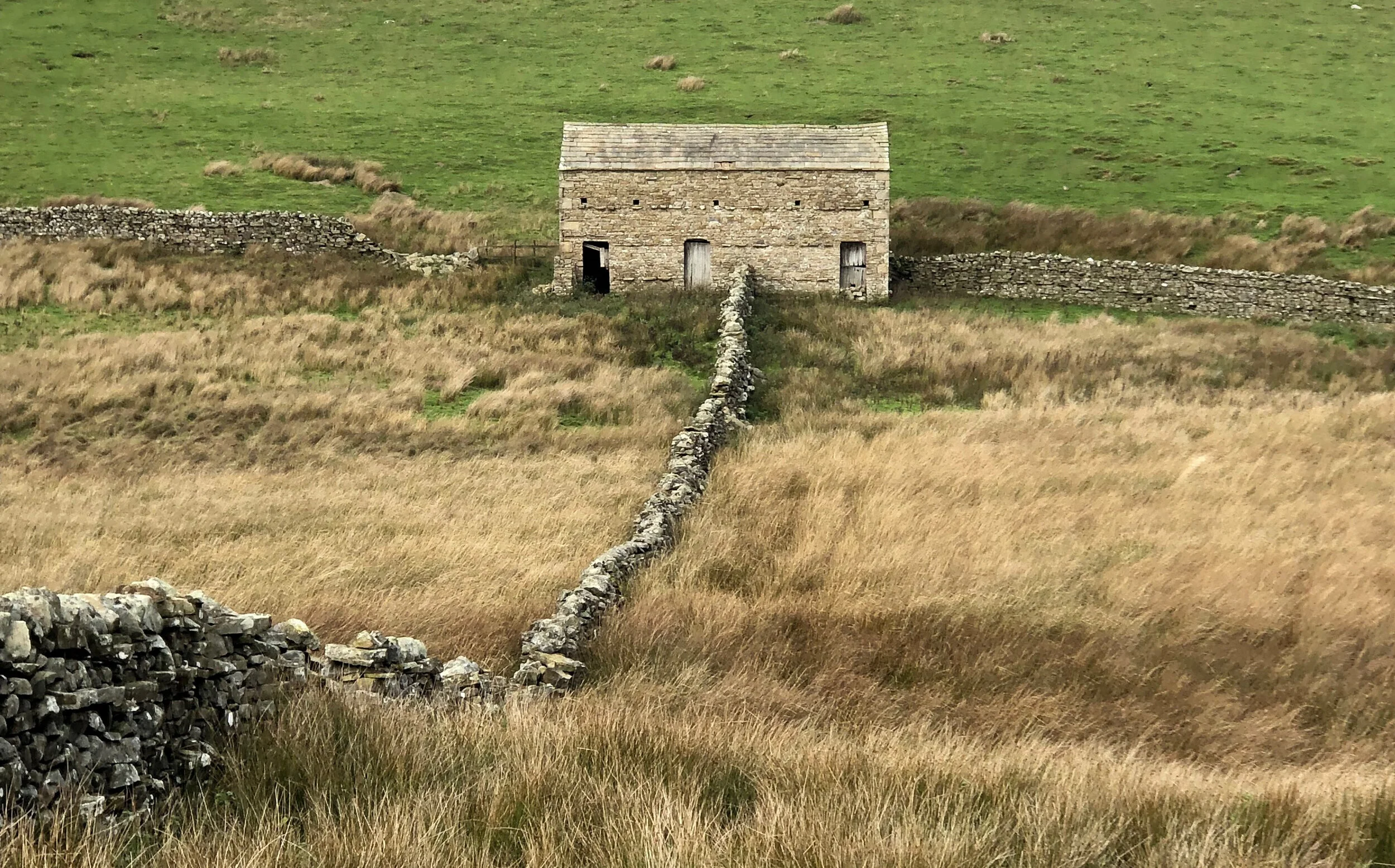
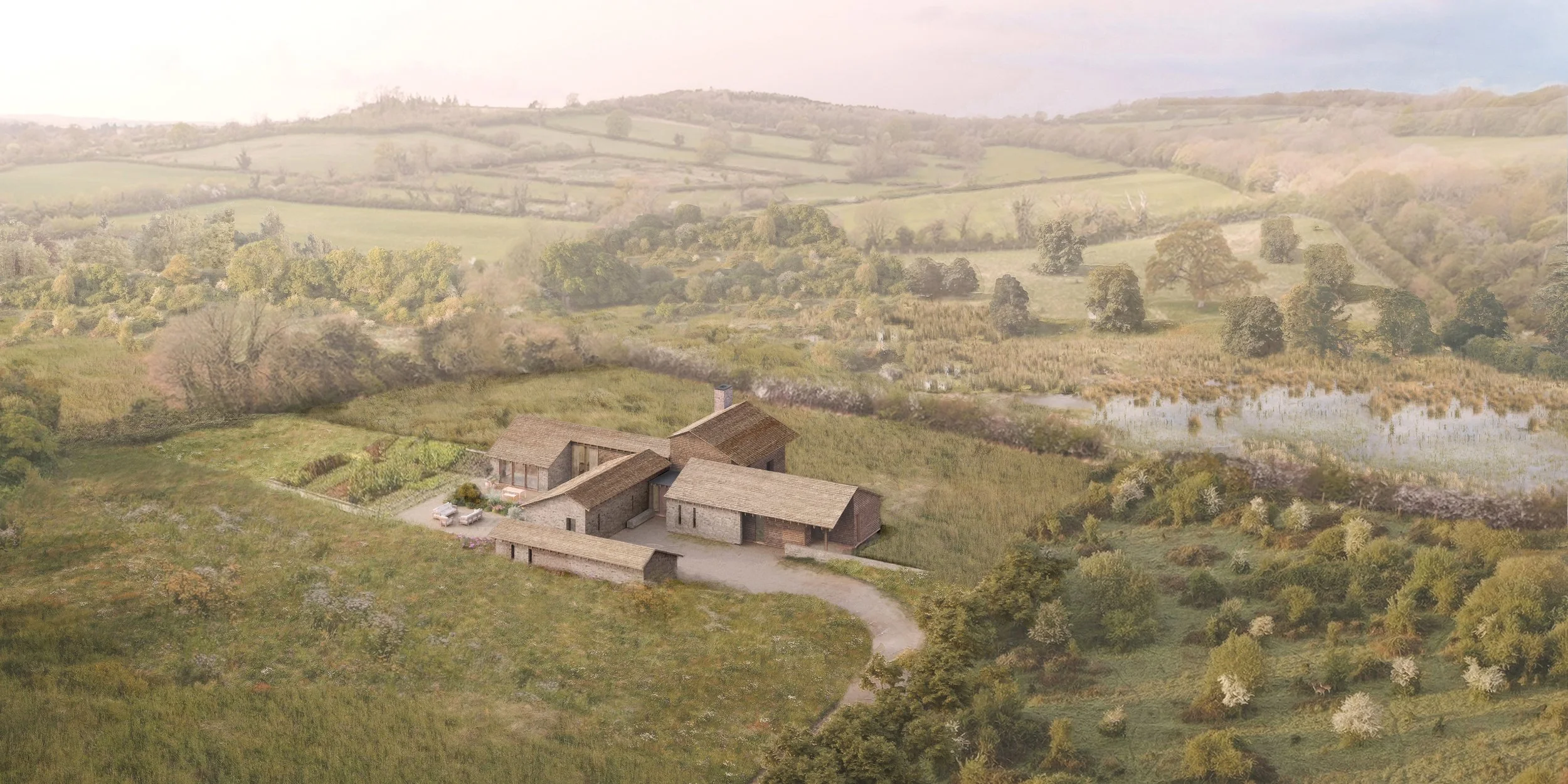
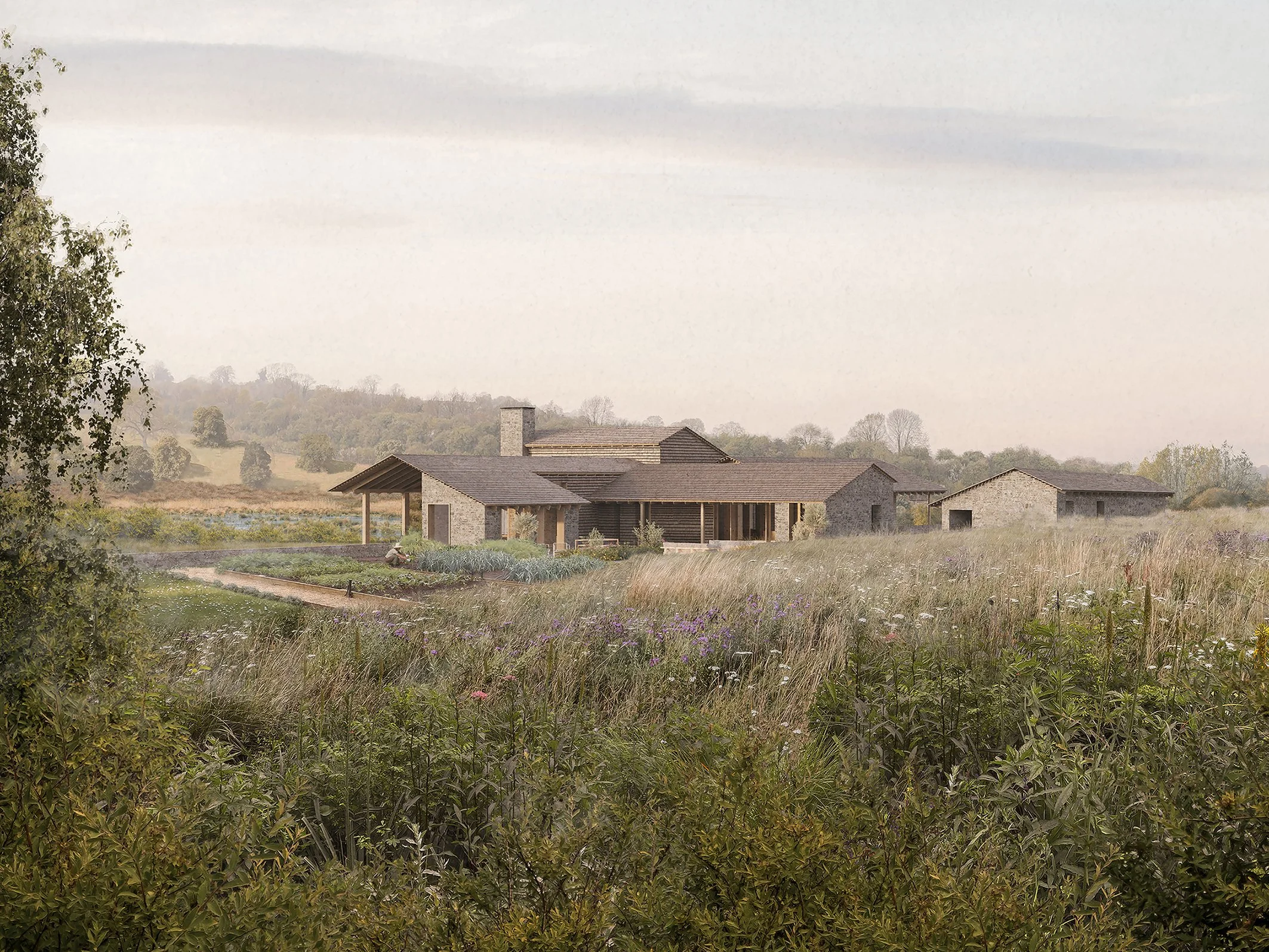
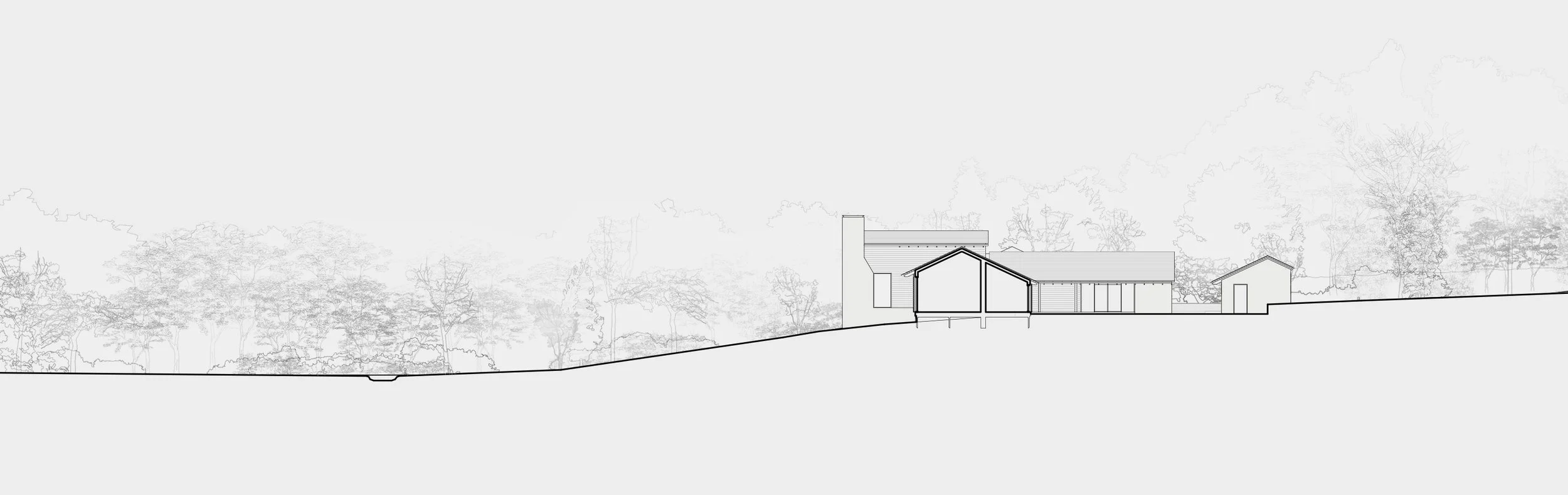
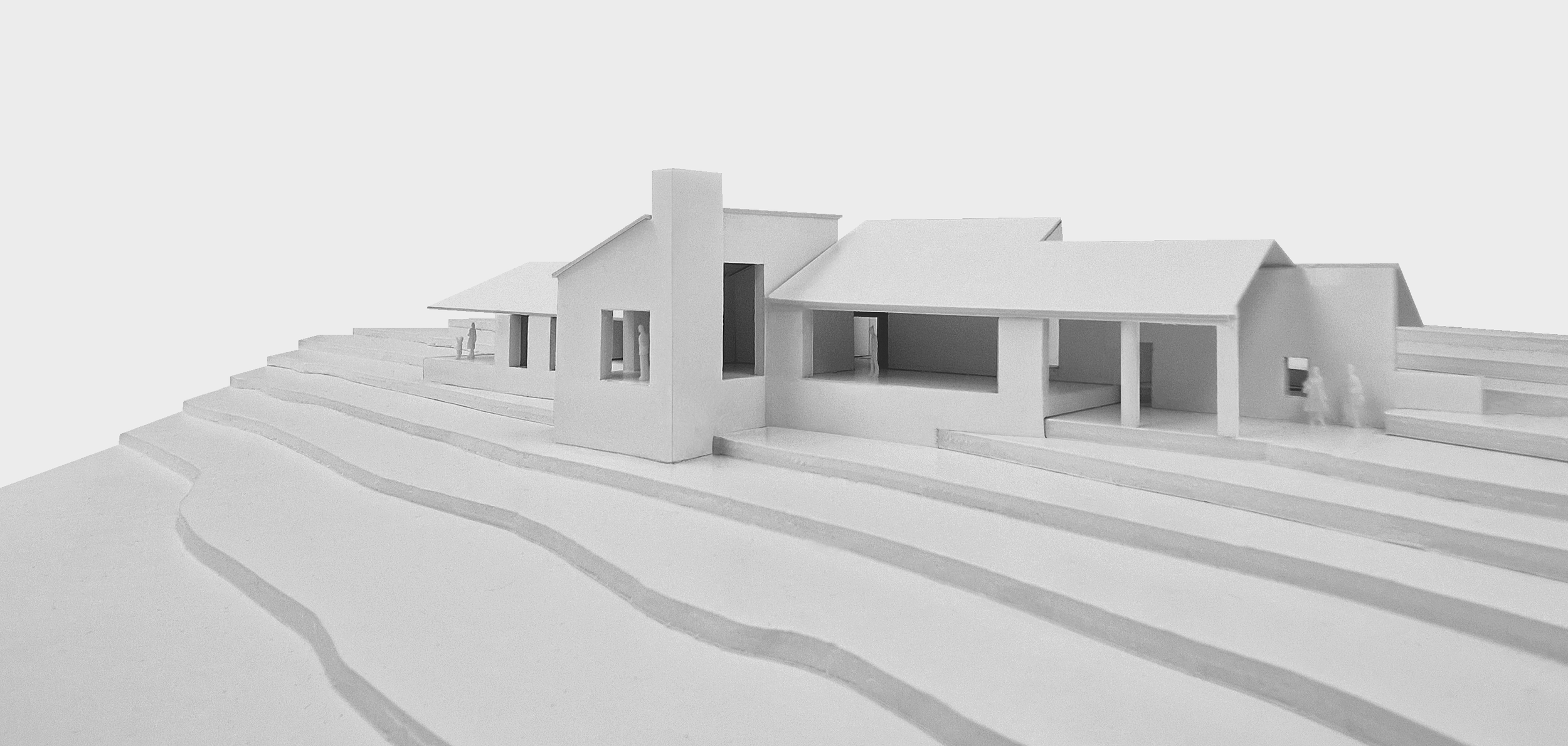
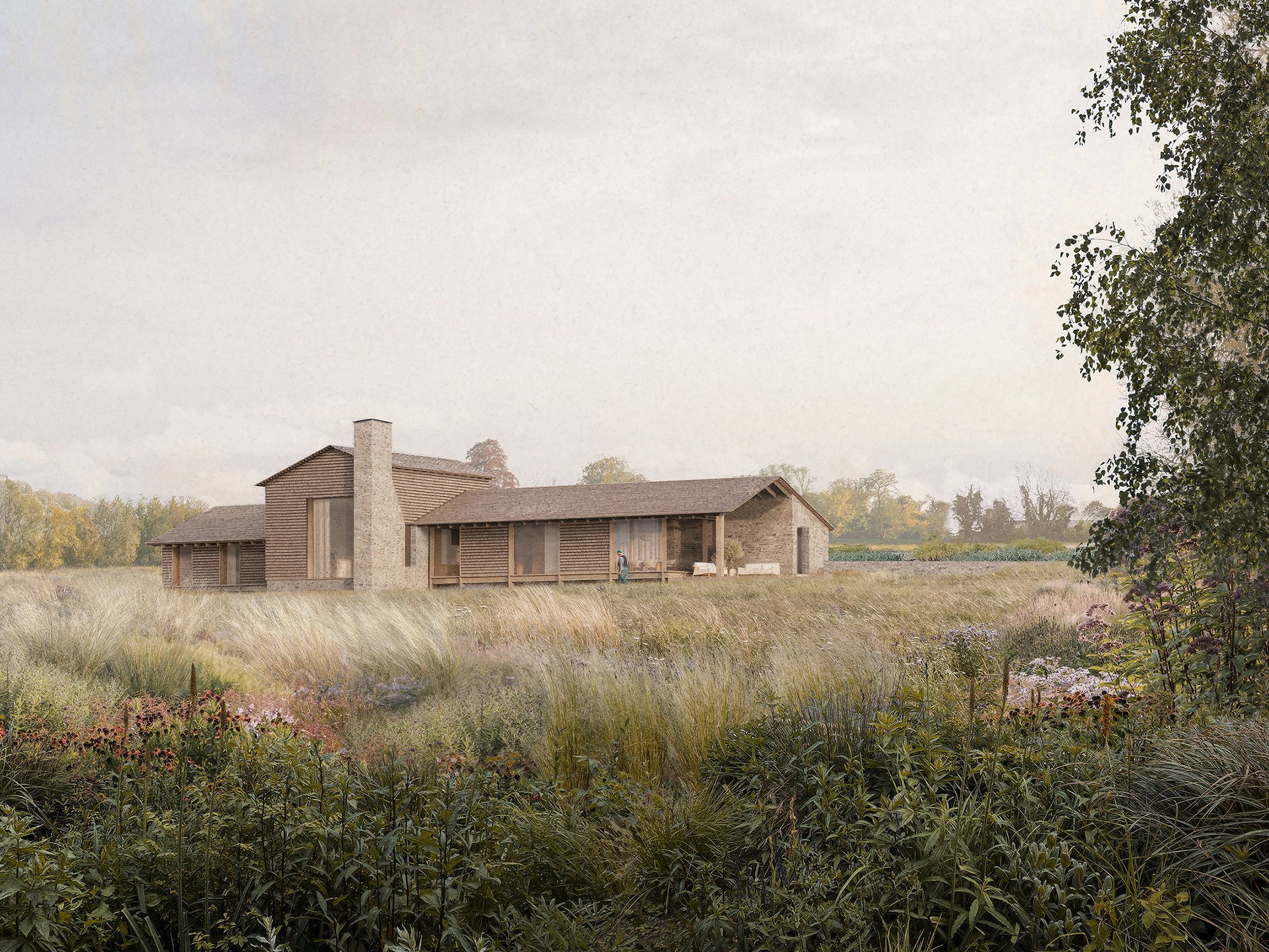
Arranged as a cluster of low-slung buildings with irregular pitched roofs, the building sits sympathetically against the landscape, with a silhouette reminiscent of traditional farmsteads.
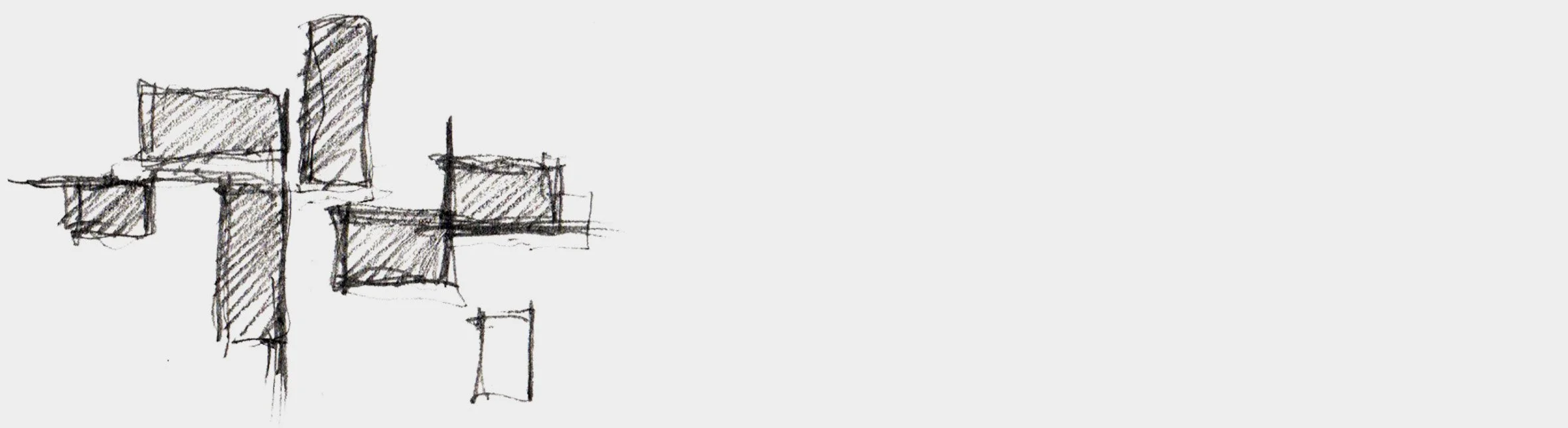
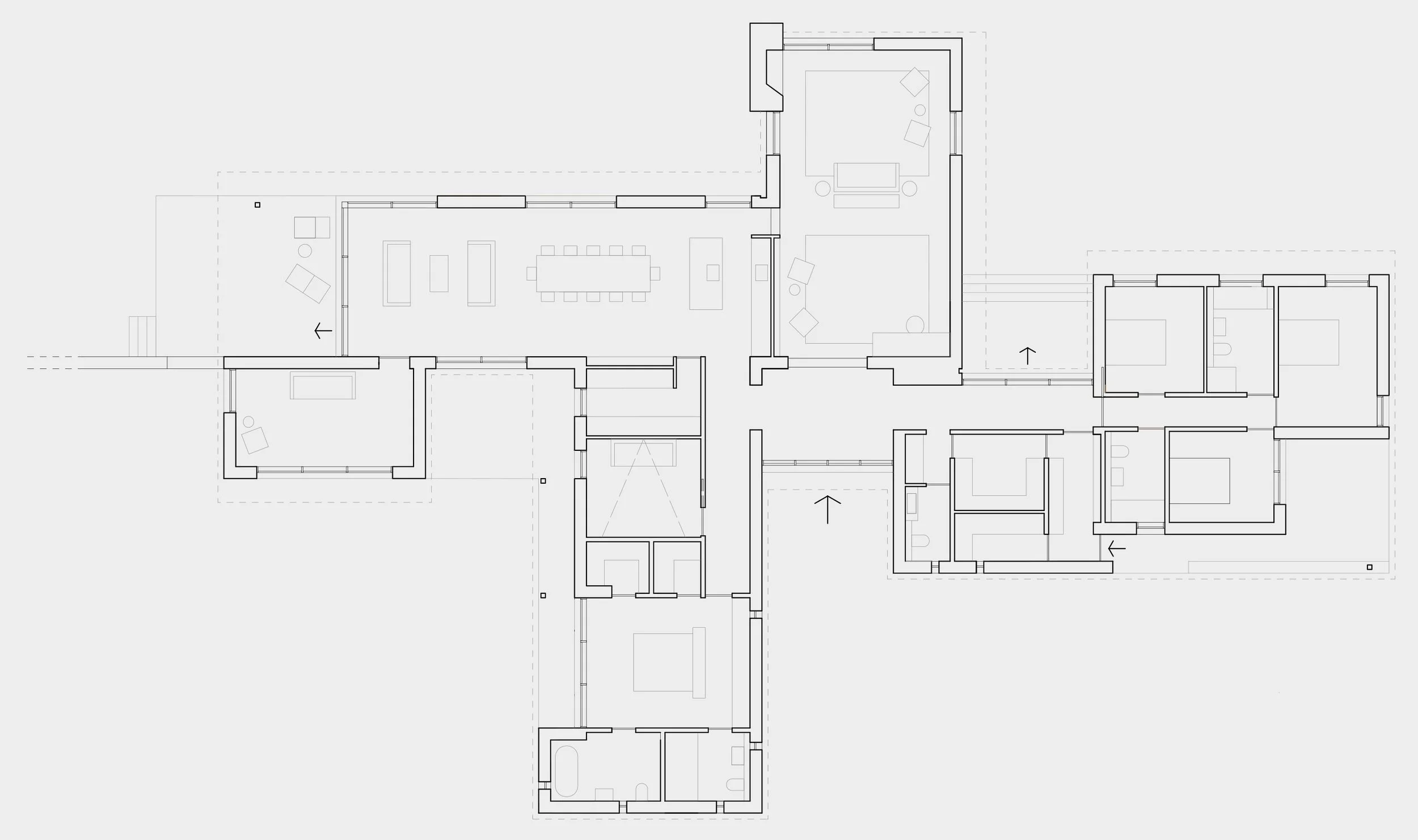
In plan the house is separated into four wings, each radiating from a central hallway. The wings extend into the landscape and form external spaces that allow the interiors to flow seamlessly into the surrounding countryside.
A kitchen garden is positioned to the south, sheltered from the wind and accessed directly from the kitchen and dining room. An evening veranda is located to the north-west, capturing the setting sun and offering expansive views across the fields. In the north-facing living room, an old oak tree is framed by a large picture window, drawing the eye towards the edge of the rewilded landscape.
Throughout the house we have balanced the desire for long view with the need for protection and enclosure. A variety of rooms, windows, nooks and niches create places with differing qualities throughout the day: different spaces where one might naturally settle to survey the surroundings, enjoy the sunlight, or find shelter.
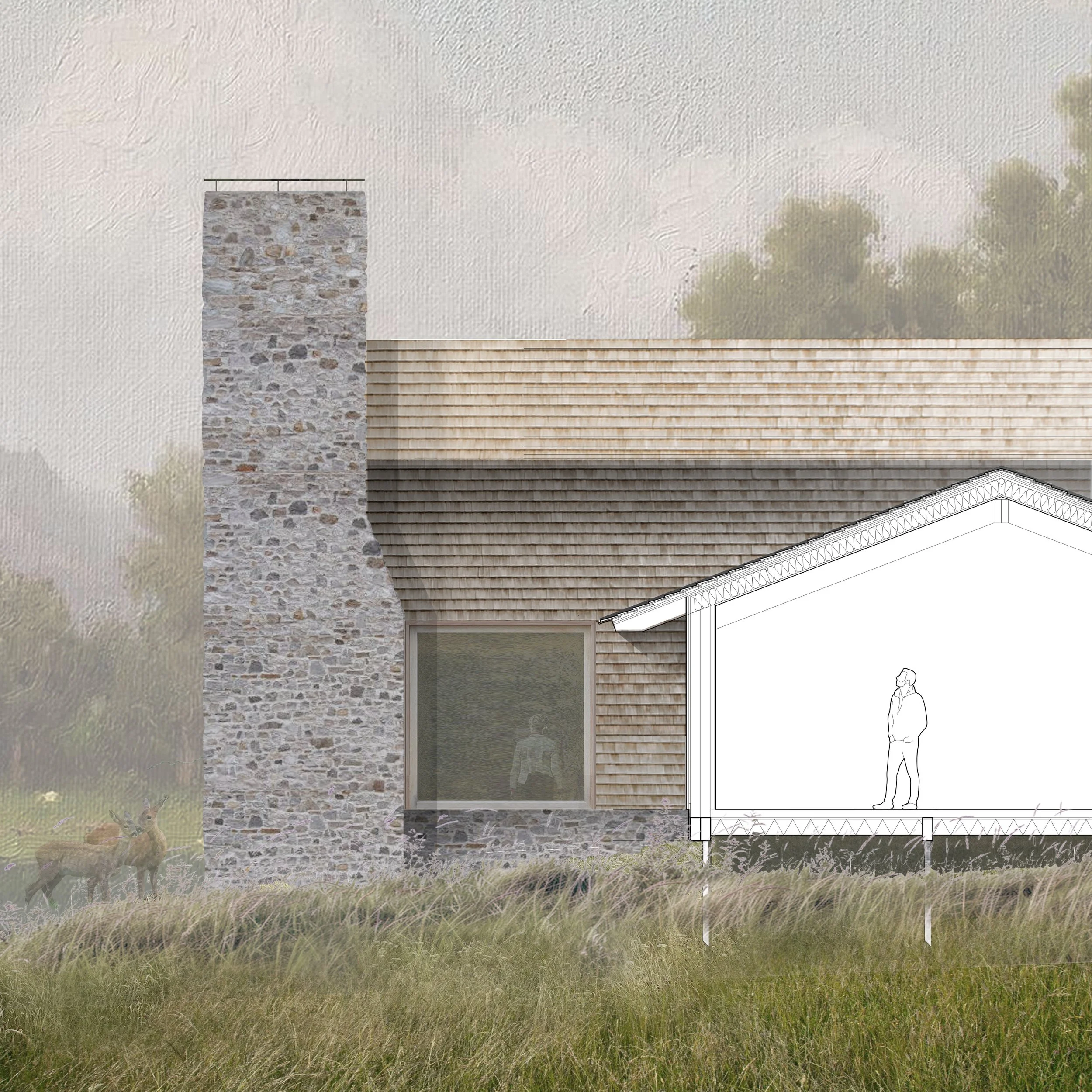
Construction materials are renewable and locally-sourced, minimising embodied carbon. The superstructure is formed from timber SIPs (structural insulated panels) filled with recycled cardboard insulation, while the exposed roof structure is made from indigenous timber. The lower section of the building is clad in local limestone while the upper walls and roofs are finished entirely in locally sourced chestnut shakes.
The house is designed to be low-carbon in construction and zero-carbon in use, generating its own heat and electricity from renewable sources and achieving high levels of insulation to minimise heat loss.
The wider landscape will be rewilded, continuing our client’s work to restore and cleanse the land. This includes removing pollutants from previous commercial farming practices, completing the restoration of ancient waterways, creating new wetland habitats, and extending their programme of tree planting and carbon capture.
We have calculated that carbon sequestration across the site will offset any emissions generated during the construction of the house, meaning the entire project (both house and landscape) will be carbon positive within its first year of occupation.
The project recently secured planning permission under the stringent ‘Paragraph 84’ clause of the National Planning Policy Framework, where we demonstrated that the proposal is of exceptional quality, truly outstanding, and capable of raising standards of rural design more generally.
We hope to start construction in 2027.

Our journal
Featured